Sunday, April 27, 2014

Wrestling with Addiction

     “Heroin is back, and it is back with a vengeance”. 

     This is a sad truth that we live with today and unfortunately, it doesn’t seem that it is getting any better. Heroin use has doubled in the past 10 years but the saddest part of it all: today’s heroin is killing people at an alarming rate. There are over a quarter million people that die of substance-related deaths each year in this country. This number is devastating. Especially when you consider that each individual leaves a family and a circle of friends with profound wounds that seldom fully repair.

     Addicts are among us everywhere. Some quite obvious, and others are well-hidden, suffering the ugly effects of this disease alone on the bathroom floor, shaking violently, soaked in tears, and overflowing with shame. Addiction is- more often than not- totally misunderstood. In our culture, there is a stigma and judgment cast upon those who struggle with substance abuse. I ask of you, before casting judgment imagine their despair. Imagine what it must feel like to believe there is no option. These people need love, not more fuel poured on the fire. How can we expect people who struggle to step forward and ask for help when they feel misunderstood and shamed? Few things are sadder than encountering a person who knows exactly what he should do, yet cannot muster enough energy to do it. For those who have to watch a loved one go through this, it is one of the saddest things in the world. These are people that we love, after all. They need an environment of support, tolerance, and understanding.

     For those readers who may think that this topic will never touch their life- I ask you to think again. When most of us drink our first beer or puff on our first joint, none of us imagine that we might be taking the first step in a journey that will lead us to a life of pain, despair, shame, and hopelessness. I know for a fact that thought never crossed my mind. And I am pretty damn sure it never crossed my brother’s mind either. Sadly, tomorrow marks one year since my brother lost his battle with addiction. The wounds of losing a loved one never quite seem to heal. The reminders are everywhere. Siblings are your first friends and for 27 years, I knew I could always count on my older brother being in my corner. That was the type of guy he was not only for me, but for everyone he considered a friend or family. That is what I miss about him most. He was one person who was always proud of me. Since his passing, there has not been a day where he wasn't the first thing I thought about in the morning. I miss him like crazy.


     Around the time of Philip Seymour Hoffman’s overdose, I remember reading, “he didn’t die because he was partying or depressed. He died because he was an addict on a day of the week with a ‘Y’ in it”. The author made it seem like death was inevitable. When I read that it angered me. Its as if there is no hope for the addict. But that is not the case. Every addict is a human being, a completely redeemable human being. Not everyone has to suffer the same fate. If you know someone going through these same issues, I am sure most of you are, just imagine the nightmare that they are living through day to day. Be there for them and support them. Not everyone has to suffer the same fate!

Chris Fluck

Friday, April 11, 2014

What I've Been Reading!

BOOKS I'VE BEEN READING
High Performance Sports Conditioning: This book gives a descriptive look into the nine basic sports performance factors: power, strength, speed, agility, coordination, quickness, flexibility, local muscular endurance and cardiovascular capacity. Each chapter is written by a coach who specializes in one of the nine factors. Some of the top coaches in their respective field give their opinion and it offers some good insight into ways to improve the nine factors. It was long, but I force myself to suffer through a few textbooks each year!


The Imaginary Girlfriend: A client of mine lent this to me when she learned that I coach wrestling. It is a memoir written by American novelist John Irving. It was a nice, quick read that offers his love of the sport of wrestling. Growing up undersized, it was tough for him to find a sport that fit his stature. Then he found wrestling. The sport changed his life and to this day, he still recalls some of those lessons and applies them to his current life.
12 Years a Slave: When I purchased this book I did not realize that the author, Solomon Northup, was the man who spent 12 years of his life as a slave. The movie (which I have not seen) is the reason for me purchasing this and for that I am grateful. Compared to other books written in this era on slavery written by a former slave, I have not read anything quite like this!

Mr. Northup was a free man living in America. His talent as a violinist led him on a tour with two men (who he never met before or seen after) performing his talent on the east coast. After one night out, and feeling ill, he went home to bed. He woke up in shackles with no recollection of how he got there and what happened to him the previous night. The remainder of the book covers the 12 years he spent in slavery and his attempts at returning to freedom. Persistence and the compassion of a fellow human ultimately led to his freedom!

You Herd Me!: Over the past 5 or 6 years, I have spent many hours listening to Colin Cowherd on ESPN Radio. He is the sports talk radio guy who doesn't always discuss sports. He is a bit of a contrarian by nature and for that I like hearing his opinion (even though I do not always agree with it). He discusses everything from Tiger Woods "sex addiction" (and how it only became an issue because his wife found out), to how LeBron gets dogged for leaving the Cavaliers but Jordan left his entire sport to play baseball and he doesn't get slammed for it, to growing up in isolation and his opinion on NCAA basketball and the rule on one and doners (he is not a big fan of the rule). Every chapter is its own individual chapter with no real connection or flow from chapter to chapter, either way, decent read. Wouldn't recommend it to anyone who isn't a fan of The Herd!


A few years ago I came across the website scribd.com. At the time, it was free and had tons of great information on the site. The site has over 300,000 books on the site, different manuals, and some things I loved: copies of college football playbooks and different strength and conditioning programs. After a few years of not using I deciding to check it out recently. Turns out, it is now a paid member site (it is a little over $40 for the year) and has even more files loaded to the site. So basically, you spend $40 for access to thousands of books and files. To top it off, you can also save the files to your computer for future reference. It has been a great resource for me and highly recommend it to anyone who gets excited about reading!

Have a great weekend!
Chris Fluck

Friday, April 4, 2014

Becoming an Effective Coach

     In a few short months the summer will be here and that means the start of a new football season. I am going into my seventh year coaching the sport and every year a new challenge or issue arises (especially when you coach the quarterback position) This year we will be anointing a new starting quarterback. Our two-year starter at the position graduated , as well as one of our backups, which leaves us with one returning quarterback. Some years we have 4-5 kids returning to play quarterback, other years 2-3, this year we only have 1 coming back. So is life when you coach at a small high school. This means some kids will be playing the position for the first time in their lives and their success is dependent on one thing: the coach (me).

     A coach is someone who facilitates and supports learning a task, skill, or concept by means of effective instruction. They are responsible for others obtaining goals and getting to places that they’ve never been on their own. You can be the smartest coach in the world but if you can’t get your players or clients to understand and execute those great ideas, then those ideas aren’t worth s***. If you want to see how effective a coach may be, all you need to do is look at the improvement, learning and success of their players or clients. If learning and improvement is not going on, then there is a disconnect somewhere in the chain between player and coach. I recently came across the "five minds" that every coach should have when coaching. The player trusts their coach and everything they are taught. With that being said, it should be every coaches goal to excel in their field. Understanding the "five minds" will get you there!


The Five Minds of Coaching
  1. The disciplined mind refers to being a master of one’s discipline and portraying it to the student. Learning is classified into two categories. Acquisition is from teacher to student and participation occurs through active engagement. The successful coach needs to use a mixed approach when teaching their discipline.
  2. The synthesizing mind is blending all the information learned to create their own methods and practices. The information is acquired over the years talking to others in the field, attending clinics/conferences, finding a mentor, and through experience. If you learn 1-2 things each season that will help you improve your trade, you will be in good shape moving forward!
  3. The creative mind builds off of the disciplined and synthesizing mind. The goal of the creative mind is to ruffle a few feathers, challenge the contours of the profession and build your own set of guidelines and practices. The creative mind lies at the heart of coaching. As Bill Belichick said, “You’ve got to keep doing what you’re doing, but you’ve got to find ways of doing it and finding ways of making it fun”. This prevents any type of staleness and will keep the athlete engaged. At some point in the season every coach gets a feeling that their kids may not be totally engaged in what you are doing. When this occurs it is usually too late. Mix in new ideas, games, or challenges along the way to keep the kids engaged.
  4. The respectful mind is your ability to understand and work with others. In my opinion, this is the most overlooked of the five. With experience, you learn how to deal with players on an individual level. In order to do that, you need to communicate with the kids and learn a little bit about each one. I am no psychologist but learning how some kids are "wired" will help give you a better understanding on how they respond to things. One of my big pet peeves is when a coach doesn’t even take the time to learn a kids name. How do you expect a kid to have respect for you if you don’t take the time, or care enough, to learn and address him by name. 
  5. Lastly, it is the ethical mind. This is associated with making decisions that are in the best interest of society as a whole rather than your self-interest. Listening to Colin Cowherd’s radio show this week, a good example of the ethical mind came up. Denver Broncos wide receiver Wes Welker received two concussions within a four week span. He passed the concussion protocol which allowed him to return to play, but when does the time come that the coach or organization sits that player down? This is the ethical mind at heart.
In the world of coaching, new challenges will always present itself. I will have my work cut out for me in terms of getting a new starter ready, finding a backup from one of the other positions, and getting one of our freshmen quarterbacks up to speed so they'll be able to handle a junior varsity schedule. This is going to be a fun summer!

Chris Fluck

Friday, March 28, 2014

From Inactive to Active!

     I have recently read some frightening news: in North America, most adults sit for about 9 hours each day. To put it lightly, this is terrible for your health. A sedentary lifestyle will cause your circulation to constrict, slows down your metabolism, your muscles shut off as they are not being used, and your connective tissue tightens. Over the long haul this could lead to more serious health conditions and in my opinion, should be viewed as a heart disease risk factor. This is a major issue, and could be the primary cause, for the fitness level (or lack thereof) of people in North America. All this needs to change!

     The possibility for change, great change, is born through positive thought processes. This is shifting your mind from thinking “what you don’t want” to “what you do want”. In order to do this there are a few steps you should follow:
  1. Create a vision for what you’d like to create. Put it on a board, write it down, visualize where you want to go. 
  2. Write a list of 5-10 inspirational books, stories, quotes, etc to help you learn more about the journey you are about to embark on and let you know that others have been in the same place that you are in.
  3. Start a journal. List the areas you’d like to improve and begin tracking your diet, activity level, moods, etc. If you feel like crap one day or lack motivation, you will be able to reference your journal to understand why.
  4. Take some time to sit quietly and be totally honest with yourself about where you are and where you’d like to go.
  5. Make a commitment to yourself to put aside time each day to nourish yourself. Your loved ones should understand that this is important for your overall health. 


     Once you have gotten your mind right it is now time to organize a workout/activity plan. The following is for those who are currently living a sedentary lifestyle. A great first step is to do some work standing up. When compared to sitting, standing burns 1.36 kcal more per minute. Multiply that by the number of work hours in a day, say 8 hours, and you have burned an additional 500 calories. That is not a bad work day! If you can't stand at work, take regular movement breaks, have some walking meetings, run more errands, take the stairs, and just do something that involves movement. Remember that lack of movement will lead to disease and you need to use this motivation along the way. In addition, it is important to partake in some type of cardiovascular training. This could be as simple as walking your dog around the block five times throughout the day or using a treadmill. In a few short weeks you will be able to elongate those walks and before you know it you are walking 30-40 minutes with no problem! Then finally, the most important step, resistance training. Join in on group exercise, (on top of the workout, the social aspect is good for your overall well-being), buy a workout video, employ a trainer, or get some assistance elsewhere. Surround yourself with supportive people to help you along the way. Change is never easy, and it is especially hard when you do not have that support system to lean on. And when you lose focus or motivation, go back to those five steps previously outlined and evaluate your current progress. Great change begins in your mind. Be honest with yourself and create a vision for success!

Best of luck!
Chris Fluck

Friday, March 21, 2014

Preventing Running Pain

     The high for this weekend has the temperature set at 59 degrees which means only one thing: spring is finally upon us. With that being said, I imagine a lot of you will be lacing up your running shoes and hitting the streets for some miles on the road (I, myself, might be one of the many). But runner beware, injuries to the ankle, feet, and knee are at an all-time high and often times it comes from a lack of strength and stability and our footwear can be at fault for this!

     Over the last few decades there has been an influx of performance footwear. We have high tops, low tops, ankle taping, braces for the ankle or knee, different types of sleeves and the list can go on. On paper this seems like a great thing but our reliance on this has gotten a bit out of hand and could be the cause for many of our running related injuries. For example, let say we wear ankle braces as we run or exercise. This additional support and stability results in all but complete dismissal of mobility of the ankle joint. The lack of mobility prevents the ankle from doing its job of absorbing stress. But if the ankle is not absorbing stress what is? Hint: work upwards along the kinetic chain and what do you find? The knee joint. The primary function of our knee is to offer stability but the lack of ankle mobility forces the knee to take on a new role. This new role diminishes the knees ability to offer stability which will eventually lead to pain in, or around, the knee joint. And then we go out and look for knee supports to go with our ankle supports and next thing you know our hip is sore, or our back hurts and we look for the next band-aid solution instead of focusing on the real issue.

     As you experience some pain your goal should be to restore function to the weak link in the chain. When you do this, you allow the surrounding links in the chain to function as they should. A very simple way to do this is to remove your shoes during your warm-ups or lower body weight training sessions. A book titled Born to Run gives good insight on the benefits of barefoot training. I am not recommending running miles upon miles barefoot or with minimalist shoes. You will be cruising for a stress fracture if you do this. I am recommending going through some warm-ups or weight training sessions without shoes on. Why go barefoot? Our foot is one of the most intricate pieces in our body. It has 26 bones, 33 joints, 12 rubbery tendons, and 18 muscles. This opens the door for tons of injury opportunities, especially when we have deconditioned musculature in the foot. When we go barefoot we strengthen the foot. The foot is the first link in our kinetic chain. As previously written, if there is a weakness in one part of our chain it will effect the next link. And when we cushion our foot with these fancy new shoes, molds, or braces, we decondition our foot musculature. As running legend Arthur Lydiard once said, "When you support an area, it gets weaker. Use it extensively, it gets stronger". Remember this when you purchase your next pair of shoes. And to reiterate my previous warning, if you try to go barefoot or minimalist shoes without first building strength, you are cruising for a stress fracture! 

Enjoy the weather and hit the streets this weekend for some roadwork!
Chris Fluck


Tuesday, March 11, 2014

What I've Been Reading

My Top Three:
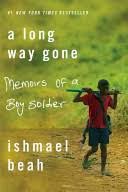
A Long Way Gone
This is the memoir of a man who grew up as a boy soldier in Sierra Leone, a once proud and friendly country, but is now going through a civil war. After a series of attacks on villages, men and boys as young as 9 were conned into fighting for their "army". They were told to "visualize the enemy, the rebels who killed your parents, your family, and those who are responsible for everything that has happened to you". Between that and the copious amounts of pills, marijuana and cocaine they were given, these boys turned into violent killers. Then one day a catholic organization, Children Associated with War (CAW), came to take the child soldiers away from their current state and re-unite them with their former community. This book puts life into perspective in terms of the struggles that we face in our own lives.

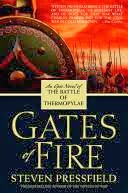
Gates of Fire
This book was long but definitely worth the read. This was the story of the Spartan warriors and the Battle of Thermoplylae told by the only Greek survivor (not exactly the same story that the movie 300 tells). Leading the Greek force were 300 Spartans. These men were chosen because they were all sires, which is basically men who had living sons. Should any of these men perish in battle, their family would live on through his son. An all-sire unit was essentially a suicide unit. After great initial success, they ultimately meet their match. There motivation: the man who stood at their shoulder. This book is a lesson in selflessness and believing in the greater good of a team, company or organization. Great read, highly recommended.

The Gift of Fear
This book was referenced in one of Malcolm Gladwell's books and fortunate that I was finally able to read it. This is a lesson in one of our basic survival signals: fear and trusting out intuition in potentially violent situations. Intuition is our most complex cognitive process but at the same time our simplest. This book is a step-by-step guide for individuals to trust their intuition when dealing with people and how to identify harmful character traits in those who we encounter. In the end, our goal remains the same, "avoid being in the presence of someone who might do you harm". This book is a tremendous resource on how to do just that!


Fitness Books
TRX Suspension Training. It was a basic guide to the benefits of the TRX training system. This unstable training approach allows you to perform bodyweight exercises with very low compressive forces but high muscle activation. That is a win-win in my book. Do not build an entire program around suspension training but mixing some of it in with your strength exercises will work wonders for core stability.  

Kettlebells from the Ground Up
This one was a 40-plus page guide to the Turkish Getup and ways to improve it. It breaks the move down into 7 steps and offers drills to train this complex maneuver. This exercise is a must have and great way to boost strength without losing any mobility.

Saturday, March 1, 2014

Football, Eating on the Road and 10,000 Swings

     Every year I get an opportunity to go to travel a bit and attend clinics. The past few days I was in Atlantic City attending one of the Glazier Clinics for football coaching. There are a wide variety of speakers and any topic you can imagine. I had an opportunity to listen to some NFL, college and high school football coaches who have been doing it a lot longer than I and been through many of the same things other coaches do. It also gives you an opportunity to network a little and make some new contacts. I spent a great deal of time listening to Complete Quarterback founder Chris Johnston and got some great things from him. If any of you have a child looking to attend a camp or get some quarterback training, I'd highly recommend working with this company. You may even see me there working a camp or two!

     When there is some good, there is also some bad. Eating healthy food during this trip was tough. I think the only time I saw a vegetable was on a hoagie or steak sandwich. Everything I planned to do just didn't work out. I forgot to bring some snacks, it was tough to stay hydrated, and I did not do any type of physical activity. A few days of inactivity never killed anyone but when you mix that with horrible food choices it is rough on the body. But tomorrow is a new day and a new training program.

     Starting tomorrow, March 2nd, I will attempt a new program. Well, actually it is more of a challenge. This is called the 10,000 Swing challenge. Over 20 workouts, you will do 10,000 swings. I spent the past few weeks preparing my body (and grip) for this program. Over 20 workouts you will do 10,000 kettlebell swings. For men, you will use a 53 pound kettlebell. The women use a 35 pounder. Here is how you do it:
10 Swings
1 rep of strength exercise
15 Swings
2 reps of strength exercise
25 Swings
3 reps of strength exercise
50 Swings
Rest

That is one round. Repeat this four more times and you have 500 swings in one session. The strength exercises you choose from are the Military Press, Goblet Squat, Chinup, and Dip (for the dip you do 2-3-5 on the reps instead of 1-2-3). You change the strength exercise each session. This program is designed to test your grit, increase lean body mass, and reduce body fat. 

Chris Fluck